Comparative Laughs and Common-Sense Picks: Choosing a Laser Marking Fume Extractor That Actually Works
Introduction — a shop story, some numbers, and a question
I was in a small shop last month watchin’ a tech sweat over fumes like it was no big deal, but the meter said otherwise. The place had a laser marking fume extractor, yet the air still felt heavy and the worker kept takin’ breaks to cough (I felt for ’em). Data shows small workshops can see PM2.5 spikes up to 5x during marking runs — that’s real. So what gives? Why do folks install extraction and still breathe junk? I want to break that down for you — keep readin’ — we got to the heart of it next.
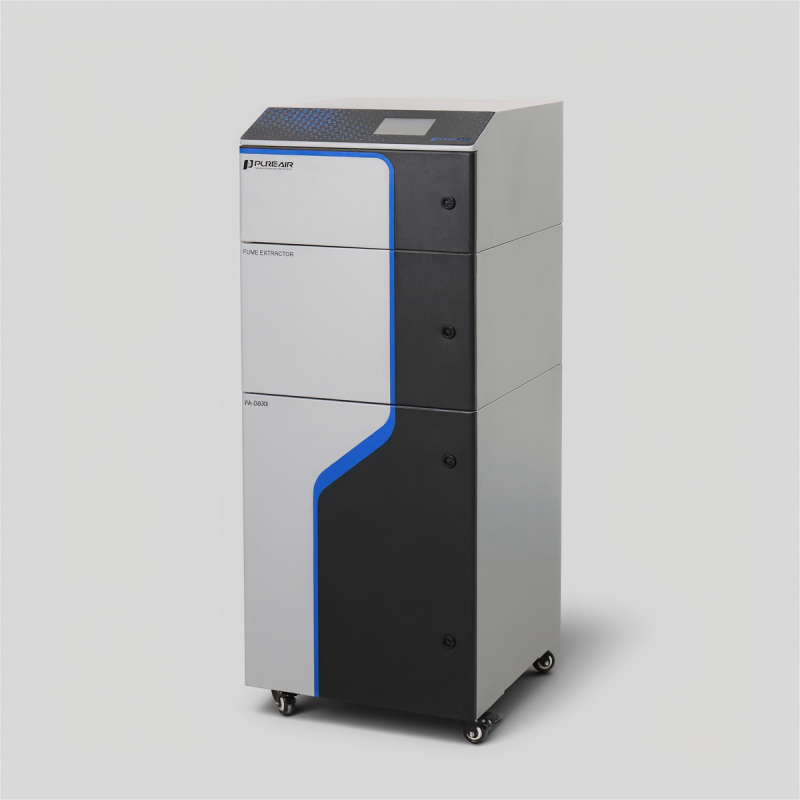
Part 2 — Why the old fixes leave folks hangin’
uv laser marking machine users tell me a lot — and I listen. Look, most shops slap a basic unit near the table and call it done. But the old ways ignore key physics: airflow rate, capture velocity, and filter media matching the job. When you don’t size the system to handle volatile organic compounds (VOCs) and particulate matter from plastics or coatings, the fumes just dance around the hood and escape. I’ve seen setups where a cheap fan mixed exhaust back into the room — embarrassing, honestly.
Technically, the issue sits in a few spots. First, insufficient capture velocity at the nozzle. Second, wrong filter stack — a HEPA filter without an activated carbon stage won’t trap VOCs well. Third, placement and duct layout: turbulence, bends, and poor seals reduce effective flow. We also gotta mention power converters and how unstable power can weaken fan performance over time. I’m tellin’ you — it’s not about one pricey part; it’s the system design. Look, it’s simpler than you think when you check each variable. How are you ducting? What’s your airflow rate at the source? Those answers matter.
Got a hotspot? What should I check first?
Check capture velocity at the workpiece, inspect seals, and verify the filter media. If VOCs linger, you likely need activated carbon upstream of the HEPA. If particulates persist, boost the airflow or shorten the duct runs. I’ve fixed a bunch of messy installs with those three moves alone — and that feels good.
Part 3 — What’s next: new tech and the practical outlook
I want us to look forward now. New principles mix smarter sensors, adaptive fan control, and better filter combos tuned for marking with a uv laser marking machine. Imagine sensors watching particulate matter and VOCs in real time, nudging the fan speed and prefilter staging automatically — that’s a game changer. I’ve tested systems with feedback loops where edge computing nodes read sensors and adjust duty cycles. The result? Lower energy use, steadier capture, and filters lasting longer. — funny how that works, right?
Semi-formal take: adoption won’t be instant, but it’s practical. Case examples show shops cutting filter replacement costs by 30% and cutting airborne particles by half when they paired smart controls with proper filter media (carbon + HEPA) and better duct layout. We should also watch for integration with shop HVAC so you’re not fighting negative pressure. Real-world pieces: simpler maintenance access, modular power converters for reliable supply, and predictable airflow specs. Put ’em together and you get a system that behaves — and that’s worth the effort.
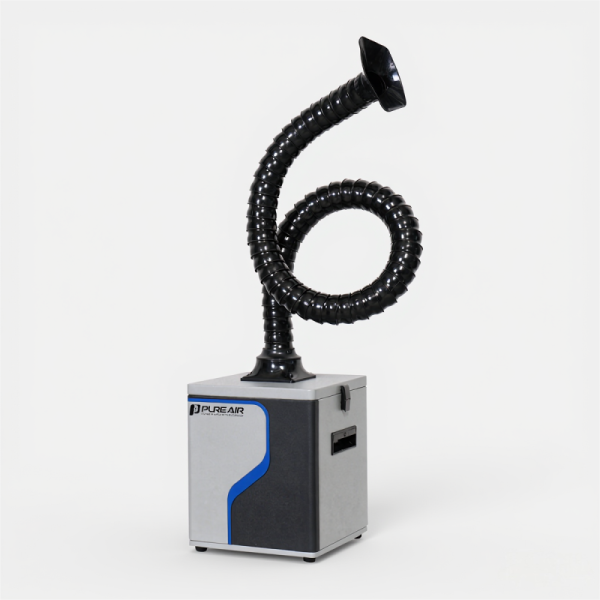
What should you measure before buyin’?
Here are three metrics I always recommend: 1) capture velocity at the source (ft/min), 2) total airflow rate (CFM) matched to your process, and 3) filter efficiency for particulates and VOC adsorption (HEPA + activated carbon ratings). Weigh those, compare maintenance cycles, and factor in sensor-based controls if you want long-term savings. I prefer systems that give clear specs and real test data — no guesswork.
I’m tellin’ you, choosing well saves time, money, and lungs. If you wanna dive deeper, check the work PURE-AIR — they make systems that hit these points and actually back up the numbers. PURE-AIR