Comparative Insight: How Airflow Differences Shape Comfort in Open‑Plan Farmhouse Rooms with Low‑Profile Bladeless Ceiling Fans
Opening: why this comparison matters
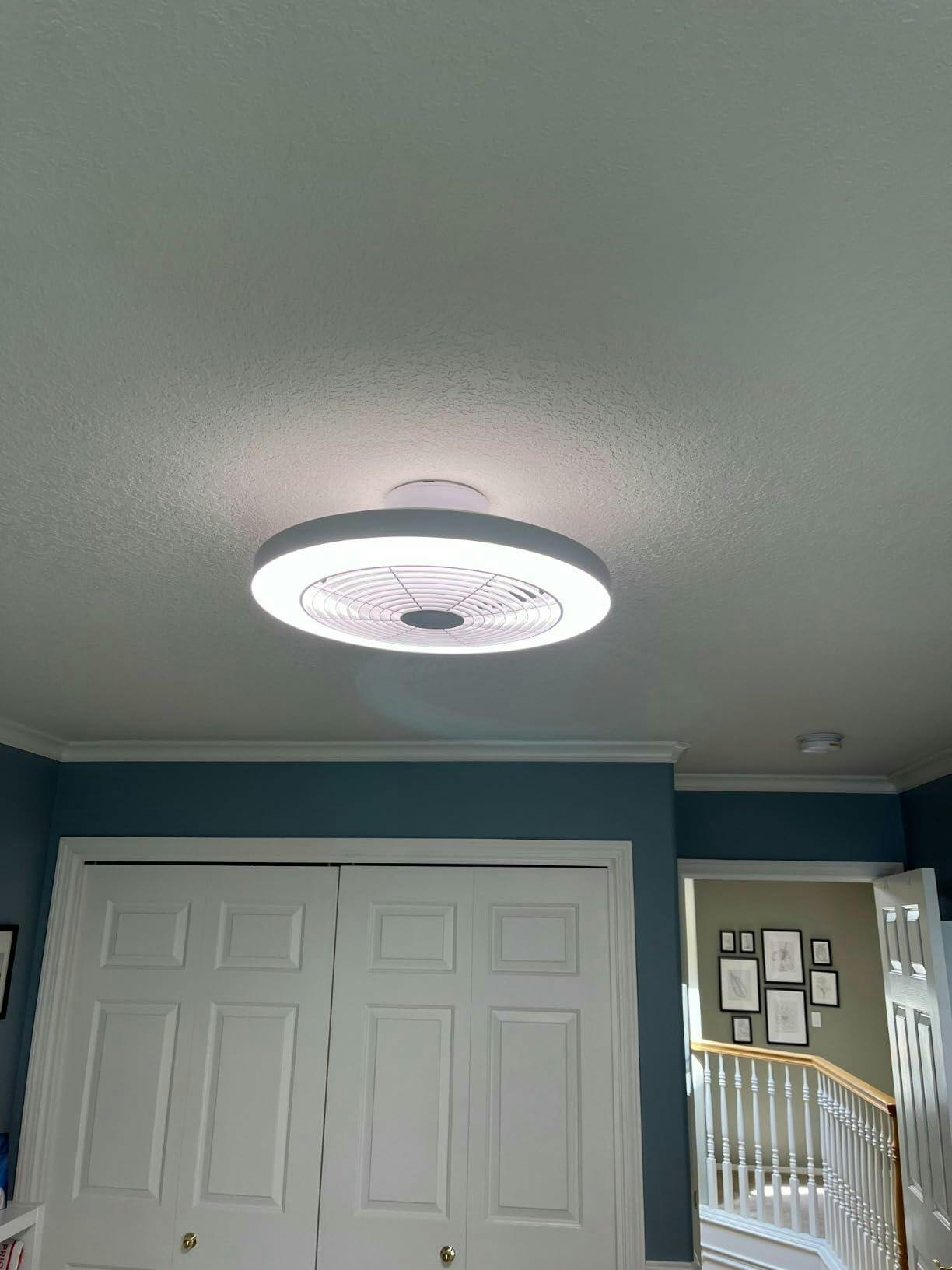
In open‑plan farmhouse layouts, the way air moves — not just how much is produced — decides whether a room feels comfortable or drafty. Comparing models lets you see which units deliver evenly across a living area that may combine a kitchen, dining and sitting space. For many homeowners the neatest solution is a bladeless ceiling fan with lights, because it pairs illumination and airflow in a low‑profile package and avoids the turbulence of traditional blades.
What to measure: the practical metrics
Focus on three practical, comparable metrics: volumetric flow (CFM), distribution uniformity and acoustic level (dBA). CFM tells you how much air the unit moves; distribution describes whether that air reaches seating zones and corners; dBA helps you judge if the fan will be a background hum or a nuisance. For thermal comfort, ASHRAE 55 gives a reliable reference for acceptable indoor conditions — useful when you match fan performance to occupancy and local climate. In Bangladesh, for instance, a Dhaka family home with high summer humidity may favour higher air movement to aid evaporative cooling, rather than simply lower temperatures.
How different low‑profile bladeless designs compare
Not all bladeless designs behave the same. Some use high‑velocity microchannels to generate a concentrated airflow; others rely on a wider annular diffuser to create a gentle, room‑filling breeze. Here’s a short comparison:

- Concentrated models: higher local CFM, good over dining tables or specific seating; can feel breezier in single zones.
- Diffuse models: lower peak velocity but superior distribution — better for open plans where evenness beats spot cooling.
- Integrated light versions: trade‑offs exist between lumen output and airflow path; choose fixtures where light housings do not interrupt the air curtain.
When you compare, check published CFM-to-watt ratios and test reports for real‑room performance — not just lab numbers. Motor torque and control electronics matter too; a weak motor may struggle to sustain advertised flow levels at low speeds.
Installation, layout and the role of lighting
Ceiling height, nearby rafters and the way kitchens are zoned all influence perceived cooling. A unit mounted too close to an exposed beam will have its airflow deflected; one set over a recessed lighting cluster may lose effective discharge area. Think about placement early — above the main seating cluster rather than the middle of an elongated plan — and ensure the diffuser aligns with traffic patterns. A low‑profile fan that also contains the light source removes clutter from vaulted ceilings, but make sure the fixture’s optical housing doesn’t block the air outlet.
Common mistakes — and practical alternatives
Brands and installers often err by equating higher CFM with better comfort. In reality, uneven air delivery can create hot pockets and draughts. Over‑reliance on small, high‑speed units to cover large plans is another misstep — they blow past occupants without mixing the whole room. If even distribution is the goal, consider pairing a central low‑profile unit with peripheral ceiling‑mounted air circulators, or choose a wider‑diffusion model designed for uniform flow. —
Three golden rules for selecting the right fan
1) Measure coverage, not just peak airflow: demand a room test or a documented flow map rather than a single CFM figure. 2) Check integration: ensure any light module and controls don’t obstruct the airflow path and that dimming or smart‑home features match your needs. 3) Prioritise real‑world performance: ask for references from homes with similar open plans or climates — a report from a house in Dhaka or another humid city is especially telling.
When the objective is discreet, even air delivery combined with reliable lighting and smart control, a well‑engineered low profile bladeless ceiling fan can be the simplest route to comfort. For many households the balance of quiet operation, even distribution and tidy aesthetics is what matters — and that balance is precisely the value you find with Orison. —